All photos by Bryan Dearsley / LuxuryUK

Commissions may be earned from LuxuryUK’s affiliate partner links
Cambridge is a city best taken slowly, especially for those willing to spend money on doing it well. Compact enough to cross on foot in 20 minutes, yet it’s home to one of the highest concentrations of preserved historic buildings in England. And most of it belongs to the 31 colleges of the University of Cambridge, with the first scholars arriving in 1209, having fled riots in Oxford, and a second wave from Paris 20 years later.
That density makes Cambridge ideal for a luxury getaway as you’re never more than a few minutes from the next thing worth seeing. Add to this a private guided tour of places like King’s College Chapel, a chauffeured punt along the River Cam, and a stay at the city’s only riverside hotel, and a few days away in one of England’s oldest college towns might just be the getaway you needed.
Explore Cambridge’s Victorian Arts and Crafts Heritage
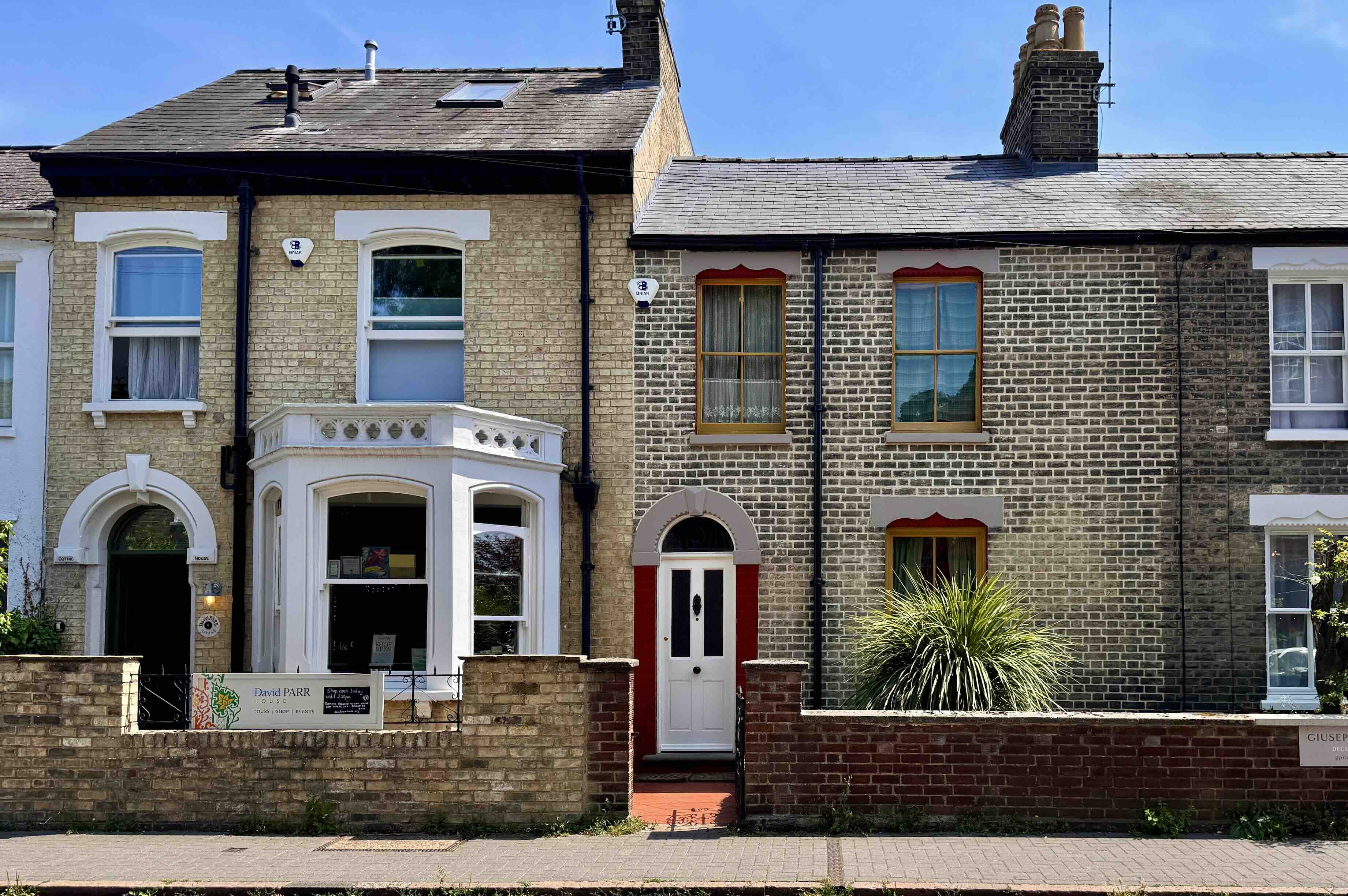
The most surprising interior in Cambridge isn’t in a college. It’s at 186 Gwydir Street, a modest terraced house off Mill Road where a working-class decorative painter called David Parr spent 40 years hand-painting his humble home’s walls and ceilings. Parr was born in Cambridge in 1854 and apprenticed at 17 to F R Leach & Sons, the local firm of craftsmen who executed the creations of legendary Arts and Crafts designers like William Morris.
Parr stayed with the firm for more than 50 years, bought the house in 1886, and brought the patterns home. He worked by “pouncing” rather than stenciling, pricking an outline onto paper, forcing charcoal through the holes, then painting in the colors by hand. In 1912 he inscribed a line on his own wall: if you do anything, do it well. And he did. Remarkably so.
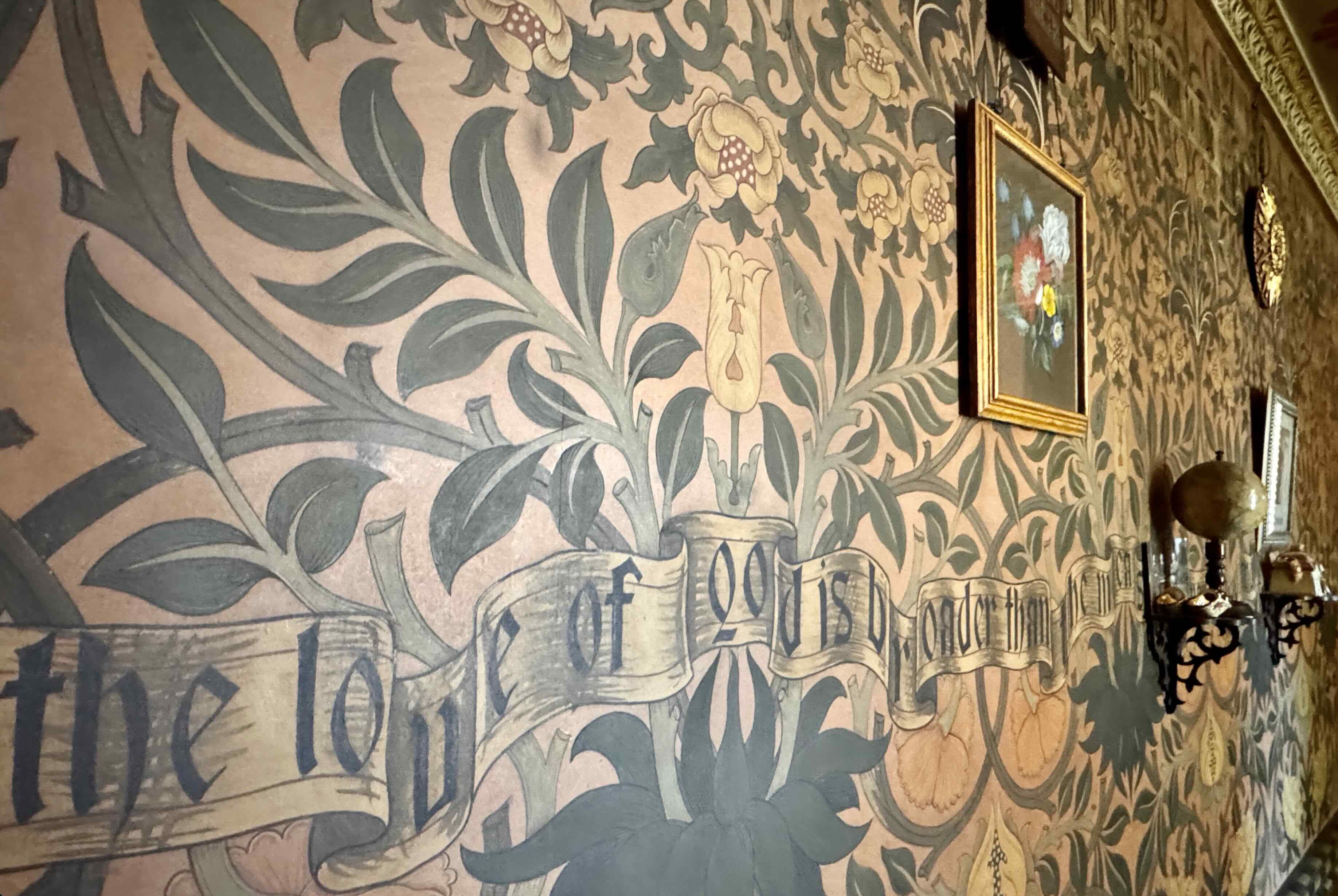
Lived in until 2013 by his granddaughter, Elsie Palmer, David Parr House has changed little since Parr’s day. Now a charity-run museum, this remarkable listed building can only be seen on small-group guided tours (booking ahead is essential). And it’s an amazing experience. Seeing such intricate, elegant work in so small a space really is astonishing, so take your time to soak it all in.
David Parr House also sells a self-guided map of surviving work done by Leach and his team, including Parr. Covering 1.2 miles, you’ll want to allow up to four hours to take it all in. Highlights include the ceiling of Jesus College Chapel, the painted interior of All Saints’ Church on Jesus Lane (across the road from the college), the mural at St Clement’s Church, and the firm’s Grade II listed former showroom at 3 St Mary’s Passage.
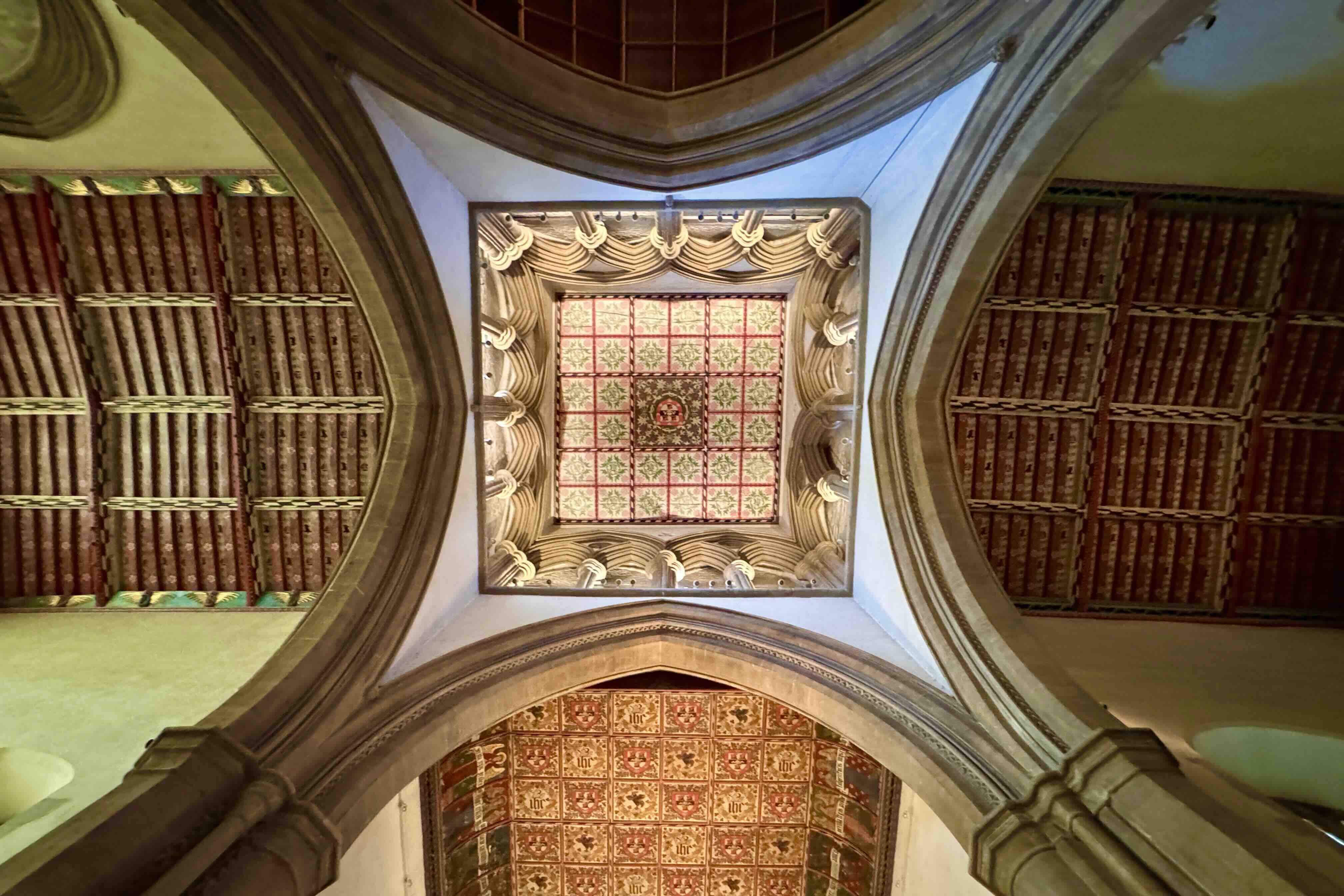
For the grander version of the same story, walk into Peterhouse. Its 13th-century Hall, the oldest collegiate building in Cambridge, was rebuilt and redecorated between 1868 and 1870 by George Gilbert Scott Junior, with stained glass by Edward Burne-Jones and Ford Madox Brown. Morris supplied the tiles around the Hall’s west fireplace, which show the four seasons, and his firm refitted the adjoining Combination Room in the same campaign.
It’s the sort of commission Parr spent his working life painting. Pair it with the Fitzwilliam Museum on Trumpington Street, which is staging A Call to Art: William Morris and the Pre-Raphaelites from 23 October 2026 until 3 May 2027. You’ll get the movement’s theory, its showpieces, and learn more about the man who did the actual painting.
You can find out more about Morris and Parr, as well as this new exhibit, on my new friend Ian Weightman’s website. You can also visit the David Parr House website for tour details.
Punting Along the Cam
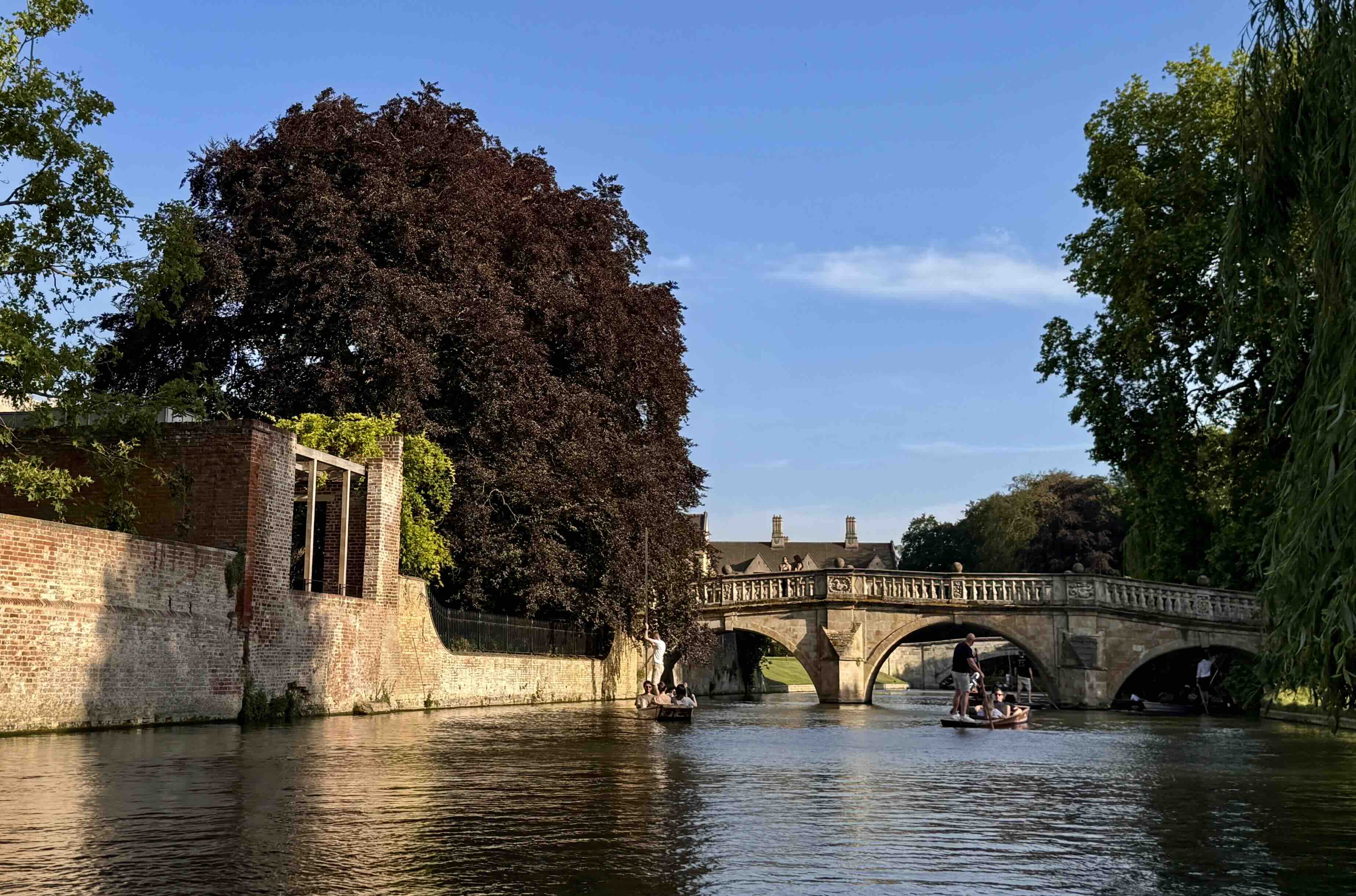
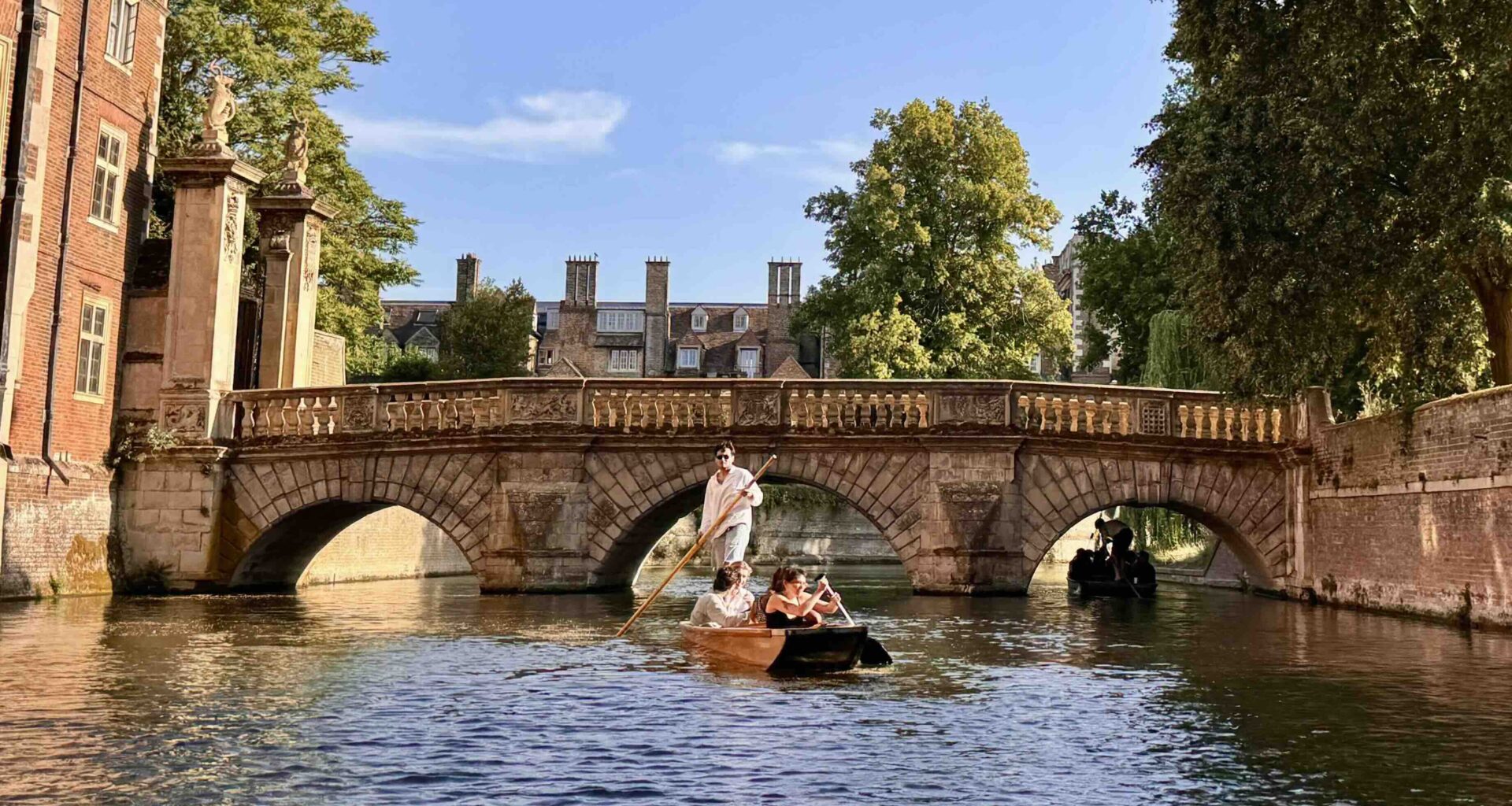
Punting on the River Cam is the one Cambridge activity that simply must be experienced, no ifs, ands, or buts. And sure, while you can do it yourself, it’s so much better to pay someone to do the hard work for you. All you need do is sit back and enjoy the view as your chauffeured punt travels slowly past the College Backs.
Scudamore’s Punting Company has been doing it since 1910 and operates from Mill Lane and Quayside, as well as Granta Place. On a shared College Backs tour, the boat is divided into sections, and on my trip, I had one to myself, which turns a group outing into something closer to private hire at a fraction of the cost. Private boats take up to 12 passengers and run 45 minutes, passing the Mathematical Bridge, the river frontage of King’s College Chapel, Wren Library at Trinity College, the Bridge of Sighs at St John’s College and the low arch at Magdalene College.
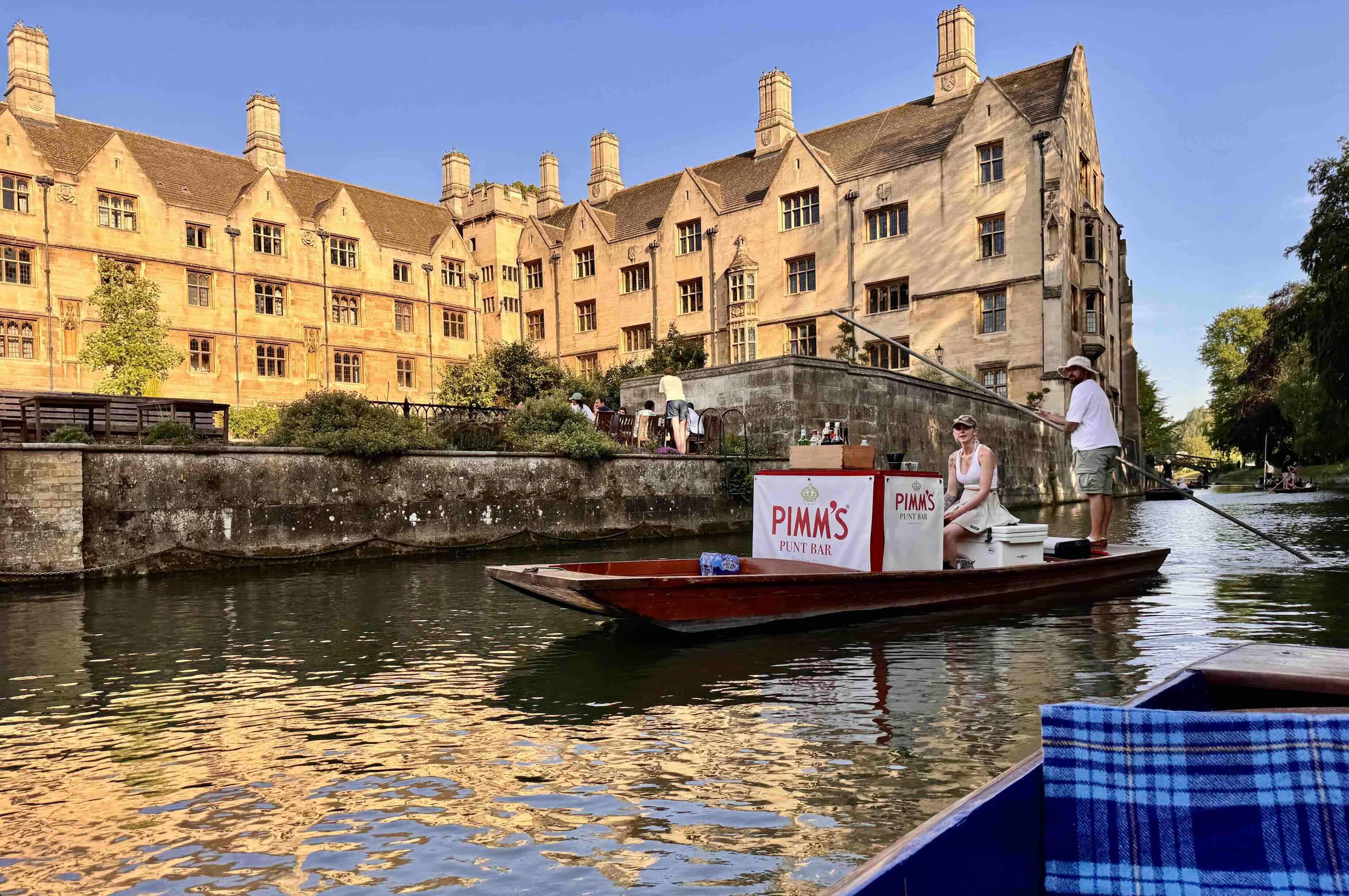
Scudamore’s also runs the versions that suit a getaway rather than a sightseeing tick-list. There are afternoon tea punts, champagne punts, evening bat safaris and seasonal firework tours, all of which need booking. If you’d rather do the work yourself (it’s not as easy as it looks!), self-hire is available by the hour, either through the city core stretch or on the quieter run south towards Grantchester Meadows, which takes the best part of an afternoon there and back.
The river paths are also worth time exploring. Silver Street Bridge gives the standard postcard view over the Mathematical Bridge and the moored punts towards Laundress Green and Sheep’s Green and is the best place to work out whether you want to punt at all. Follow the riverside path, and you reach the Punt Lift Rollers, where crews and optimistic tourists haul their boats between two stretches of water.
Mornings before 10 am and the last hour before dusk are the calmest times on the water. In high summer the middle of the day on the Backs turns into a slow-moving traffic jam of amateur punters, which is funny from the bank, and less funny from a boat. Unless, of course, you’re letting someone else do the punting.
Book a Professional Private Guided Tour
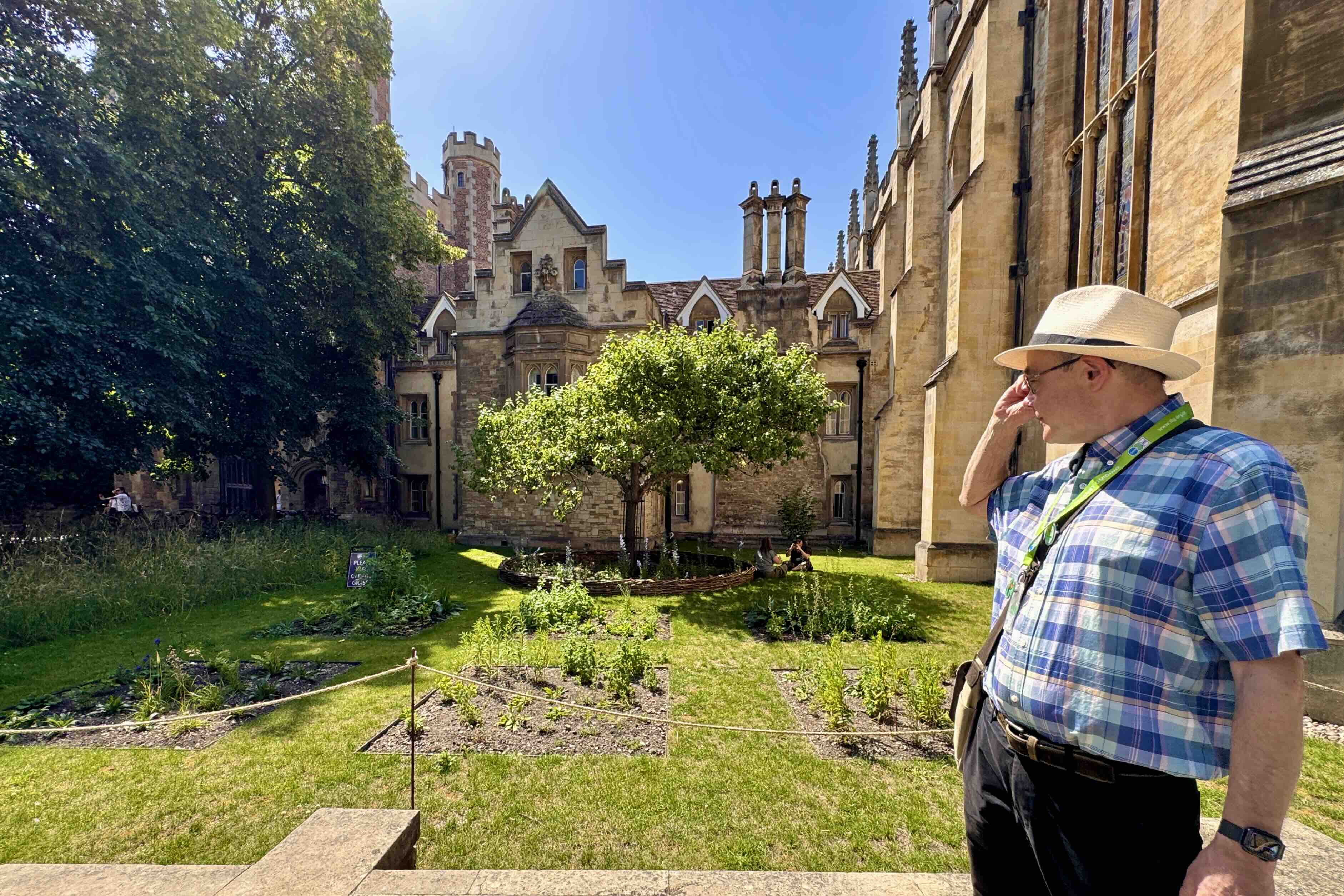
A private guide is the best money you will spend in Cambridge, mainly because the colleges control their own access. A professional badged guide knows what’s open, can beat the queues… and if they’re anything like Paul Cook, is a lot of fun to hang out with.
Cantab Tours has been running tours here since the 1970s and is one of the few operators permitted to take guided groups into King’s College, with guides certified by the Institute of Tourist Guiding. The format’s straightforward: you say what interests you, and the route’s built around it. A 60-minute slot is enough for King’s alone, but opt for a 90-minute or even two-hour tour for the chance to really dig deep. And don’t be shy. Paul was incredibly flexible, totally script-free (I threw him several curveballs), extremely knowledgeable, and very accommodating.
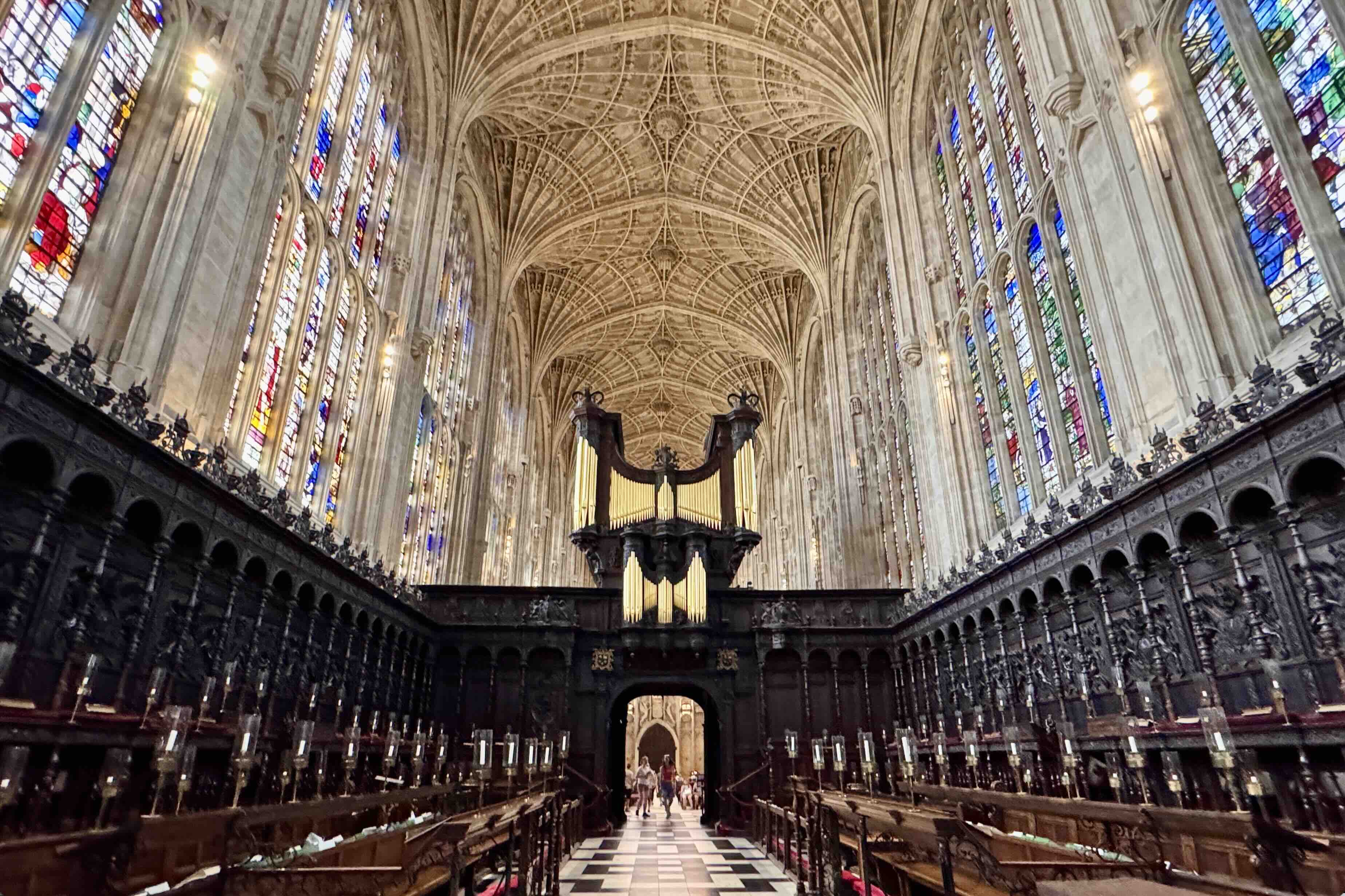
King’s College Chapel is a must on a guided tour, and Paul got me in without any wait or fuss. Founded in 1441 by Henry VI, the college took nearly 70 years to finish its chapel, and the fan vaulting by John Wastell was completed in 1515. Look for the 16th-century stained glass, the carved oak organ screen bearing the initials of Henry VIII and Anne Boleyn, and the altarpiece (the Adoration of the Magi) painted by Rubens in 1634.
If your Cambridge visit falls in term time, go to Evensong, where the King’s College Choir sings in the building it was founded to serve. Entry to the chapel and grounds is by timed ticket, so your guide will work around the slot rather than the other way round.
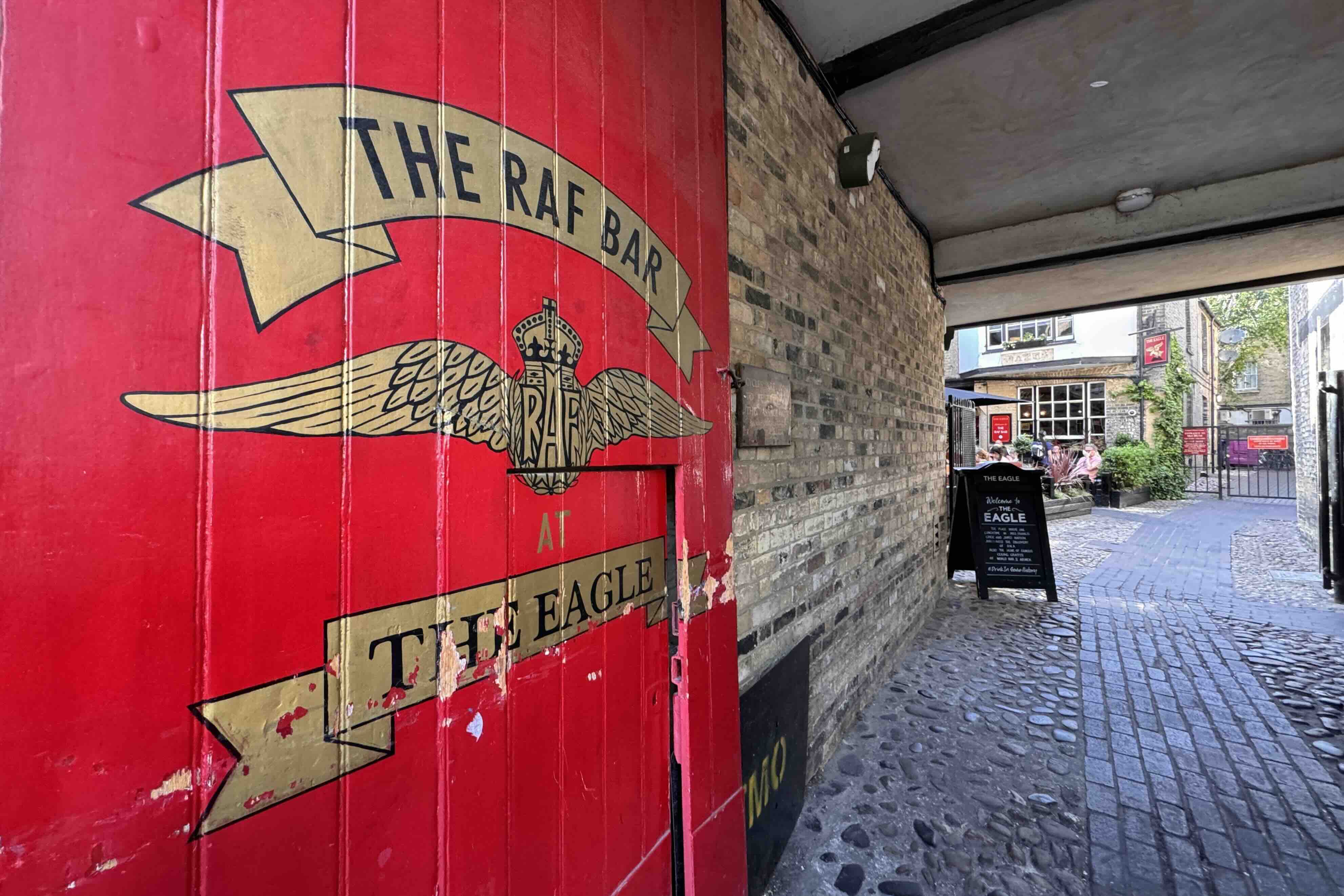
For a real treat, finish your tour at The Eagle pub on Bene’t Street. It opened in 1667 as the Eagle and Child, is the second oldest pub in the city after the Pickerel Inn, and is still owned by Corpus Christi College. The rear room is the RAF Bar, and the ceiling is covered in names, squadron numbers, and doodles burned and smeared there by British and American airmen during the Second World War using candles, lighters, and lipstick.
The pub is also where Francis Crick and James Watson announced their DNA findings on 28 February 1953. Be sure to sample the pub’s very own Eagle’s DNA bitter, and raise a toast to the discovery and a day well spent exploring Cambridge.
Walk the Colleges Your Guide Didn’t Cover
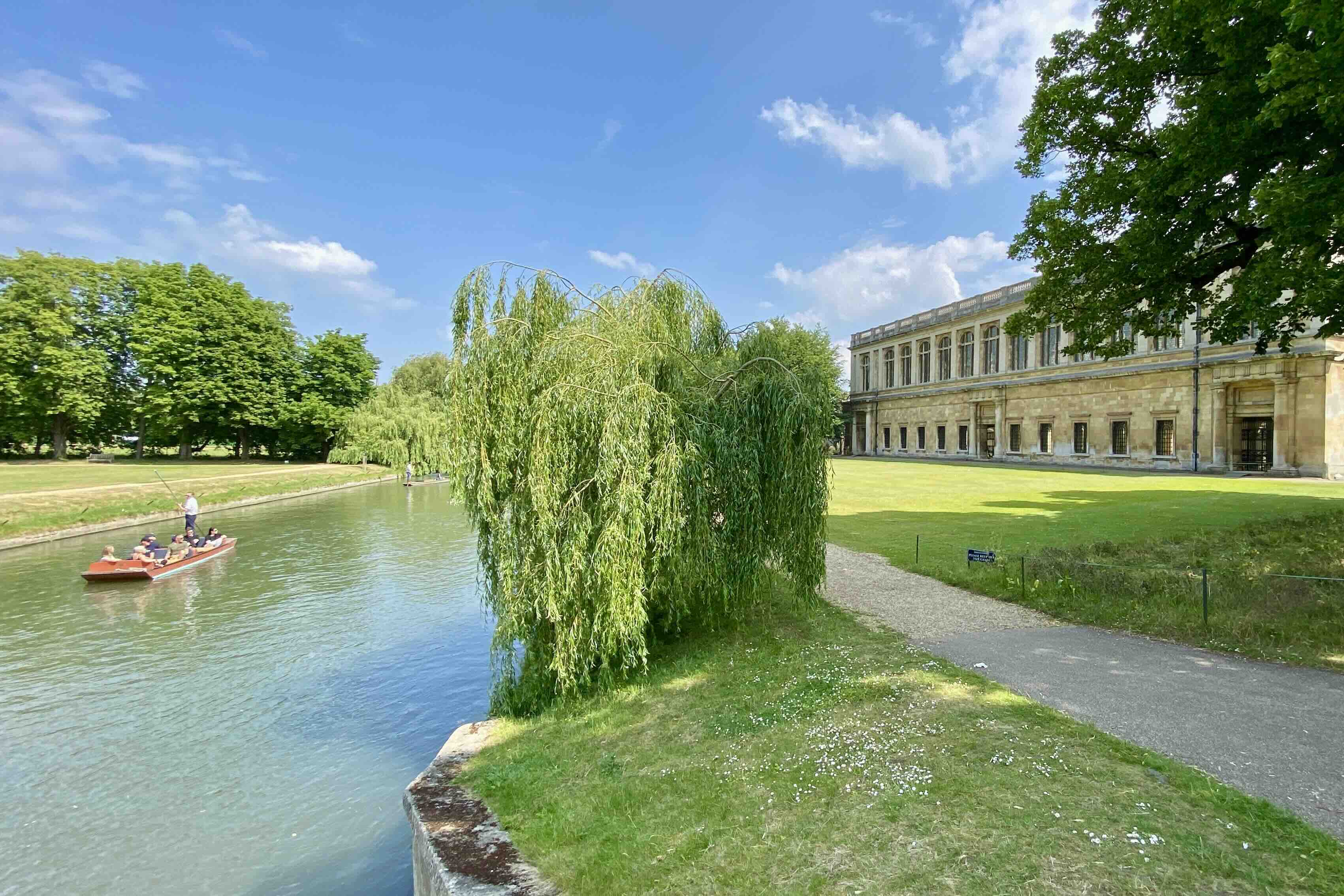
While a guided tour will get you into two or three colleges, the rest you can do yourself, and wandering them without a schedule is one of the pleasures of the city. Trinity College, founded in 1546 by Henry VIII from the merger of Michaelhouse and King’s Hall, has the largest court in Cambridge, laid out at the turn of the 17th century, with King Edward’s Gate (1428) moved to its present position in 1600.
A passage leads through to Nevile’s Court of 1605-12 and the Wren Library, designed by Sir Christopher Wren, with oak bookcases and limewood carving. Trinity counts Isaac Newton, Bertrand Russell, Stanley Baldwin, Jawaharlal Nehru, Edward VII and George VI among its former members, a roll call no other college can match.
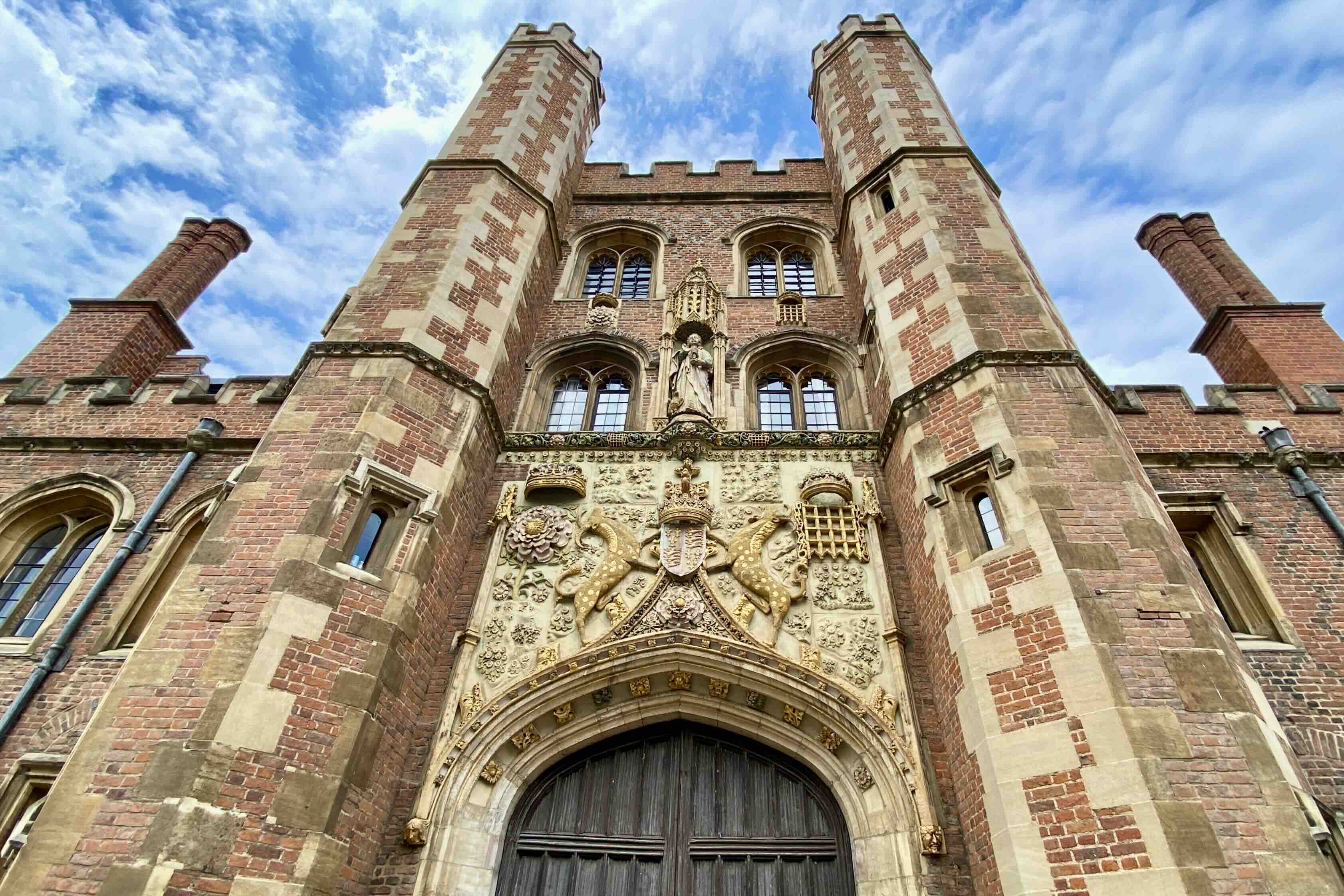
St John’s is the other must. Founded in 1511 by Lady Margaret Beaufort, mother of Henry VII, it opens through an ornamented Tudor gateway into First Court, with a dining hall of 1519 under a hammer beam roof and a Combination Room ceiling covered in plaster vines. Second Court, built in 1602, is the handsomest brick courtyard in Cambridge, and the Bridge of Sighs of 1831 carries you over the Cam into New Court.
Queens’ College has the most complete run of medieval buildings, including the red brick Old Court from the 1440s, Cloister Court of 1460 with the half-timbered President’s Lodge, and the Erasmus Tower, named for the scholar who taught Greek here between 1511 and 1514.
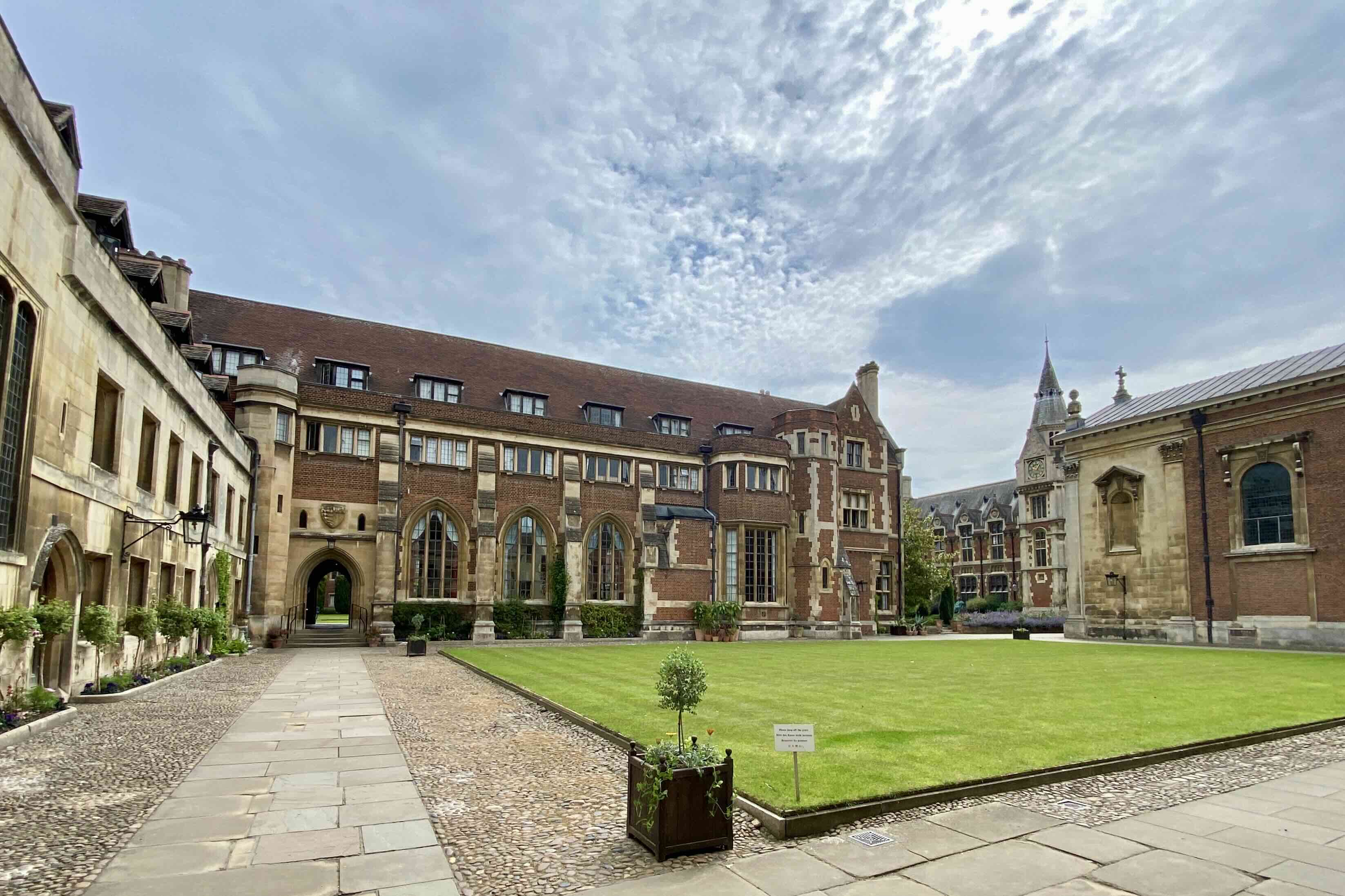
Smaller colleges reward a 20-minute look. Corpus Christi College was founded in 1352 by two town guilds rather than a royal patron, and its Old Court of 1377 is among the oldest continuously occupied courts in Cambridge; the library holds the manuscripts collected by Matthew Parker, Archbishop of Canterbury. Next door, St Bene’t’s Church was the original college chapel and has the oldest building fabric in the city in its late Saxon tower.
Pembroke College, founded in 1347, has a chapel of 1665 that was Wren’s first completed work. One myth worth retiring while you walk: the Mathematical Bridge was not built without nails and did not fall apart when curious students took it to pieces. It has always used fastenings, and the 1905 structure is the third on the site.
Check individual college websites before setting out, since most close to visitors during examinations in May and June, and several charge for entry. And even if you don’t go in, merely walking past them is an experience in itself.
Step Inside a Church or Two
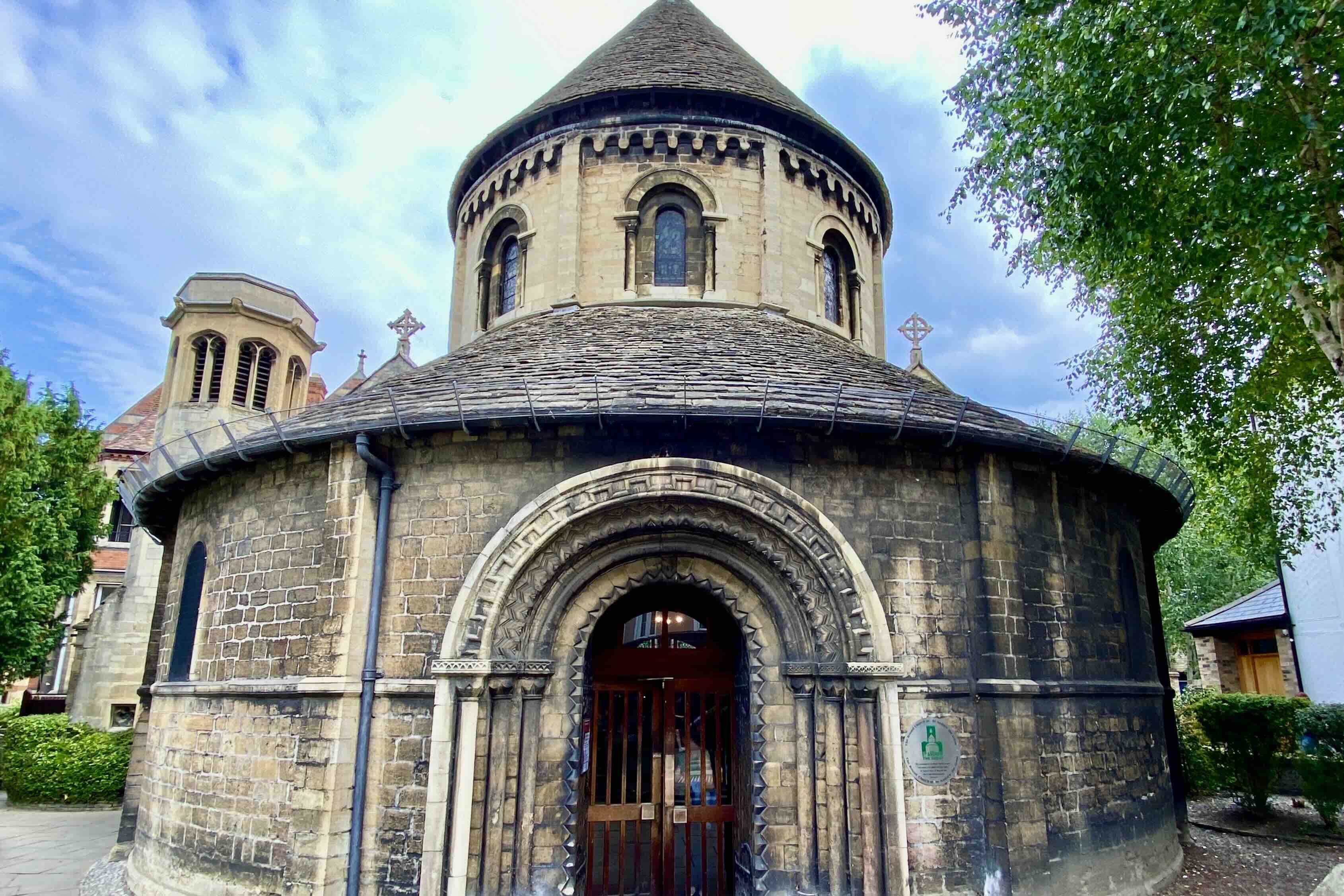
Cambridge has one genuinely rare building that’s a must-see… and it’s not a college. The Round Church (properly the Church of the Holy Sepulchre) was built about 1130 on Bridge Street and is one of only four medieval round churches still in use in England. Modeled on the rotunda of the church of the same name in Jerusalem, it predates the university.
The circular nave rests on eight thick Norman columns, each capital carved differently, with a zigzag-carved west doorway outside. Gothic windows and carved wooden angels were added in the 15th century, and Victorian tiles later still. It now features an exhibition and a short film on the city’s history.
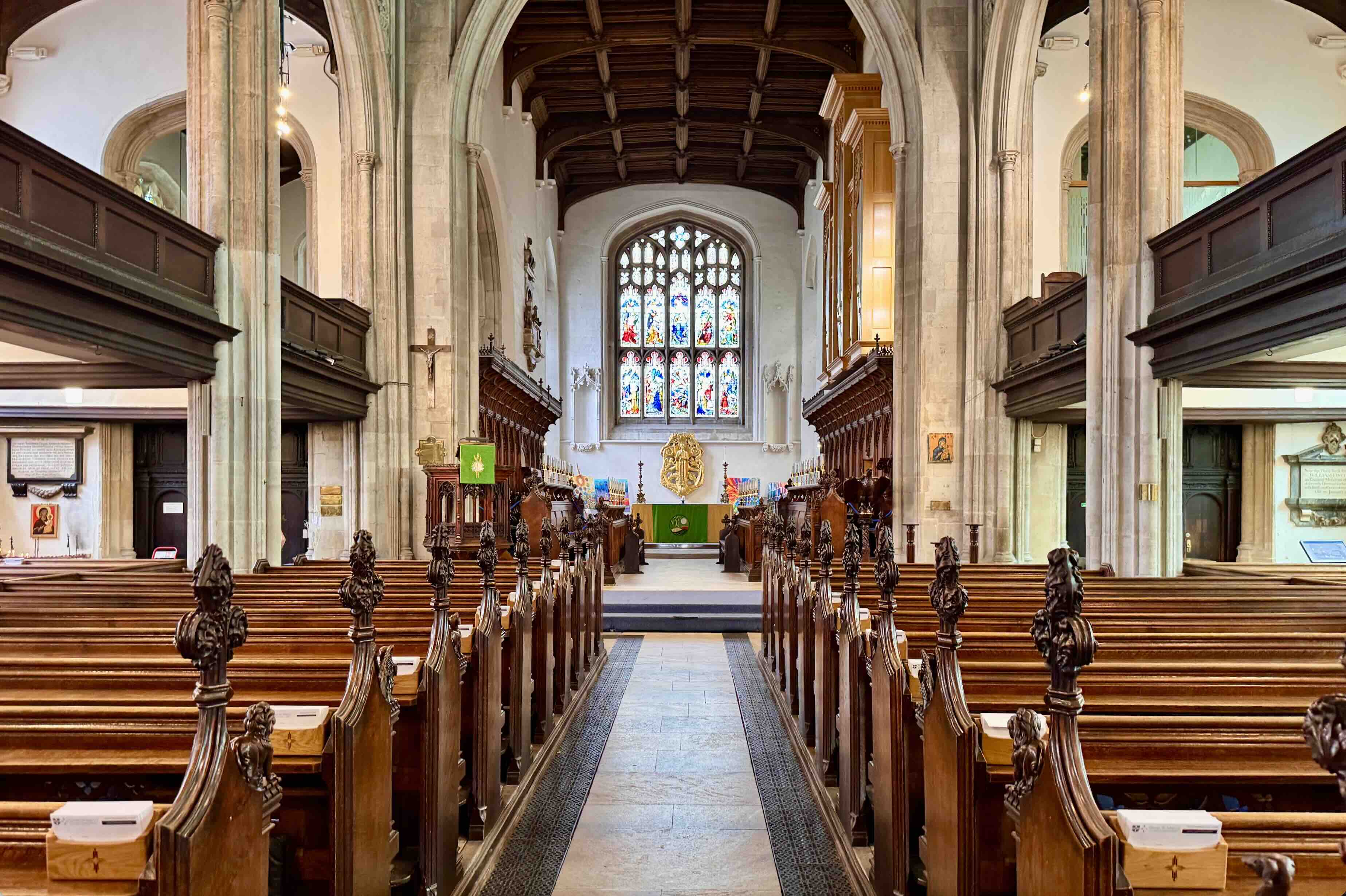
Great St Mary’s is the Cambridge church to climb. Rebuilt in 1478 and serving as both parish and university church, its tower was completed in 1608 and the galleries added in 1739. A narrow spiral staircase leads to an open viewing platform, and the ticket comes with a leaflet identifying what you’re looking at. It’s the best overview of the city you can get, and a useful first stop for orienting yourself.
Inside, look for the first edition King James Bible near the entrance. The ticket also carries a discount at the Michaelhouse Café, which occupies a converted church a short walk away and is a better lunch stop than anything on King’s Parade. Little St Mary’s, on Trumpington Street near Peterhouse, is a small Anglican parish church known for its stained glass and for a memorial to a relative of America’s George Washington bearing an early version of the stars and stripes.
The Church of Our Lady and the English Martyrs, built between 1885 and 1890 on Hills Road, is one of the largest Roman Catholic churches in Britain. It’s a full-blooded piece of Gothic Revival design, easy to reach on the walk between the station and the city’s core.
A Day of Museum Hopping
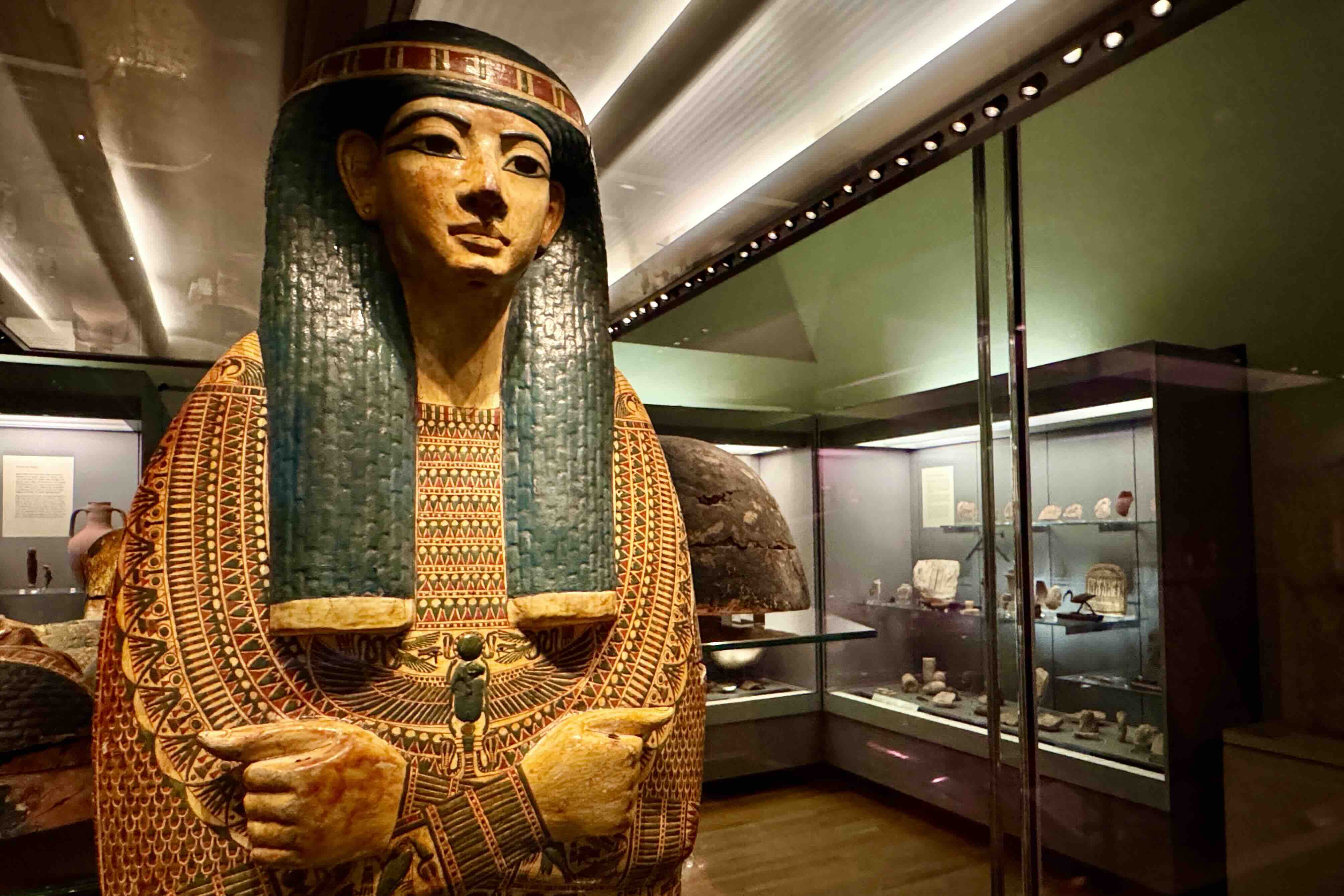
The Fitzwilliam is the city’s must-see, and entry is free. Its Grade I listed building on Trumpington Street holds more than half a million objects, including English pottery, Greek, Roman and Egyptian antiquities, and rare manuscripts. The picture galleries run from Titian and Rembrandt through Van Dyck and Rubens to Hogarth, Gainsborough and Turner, then on to Monet and Degas.
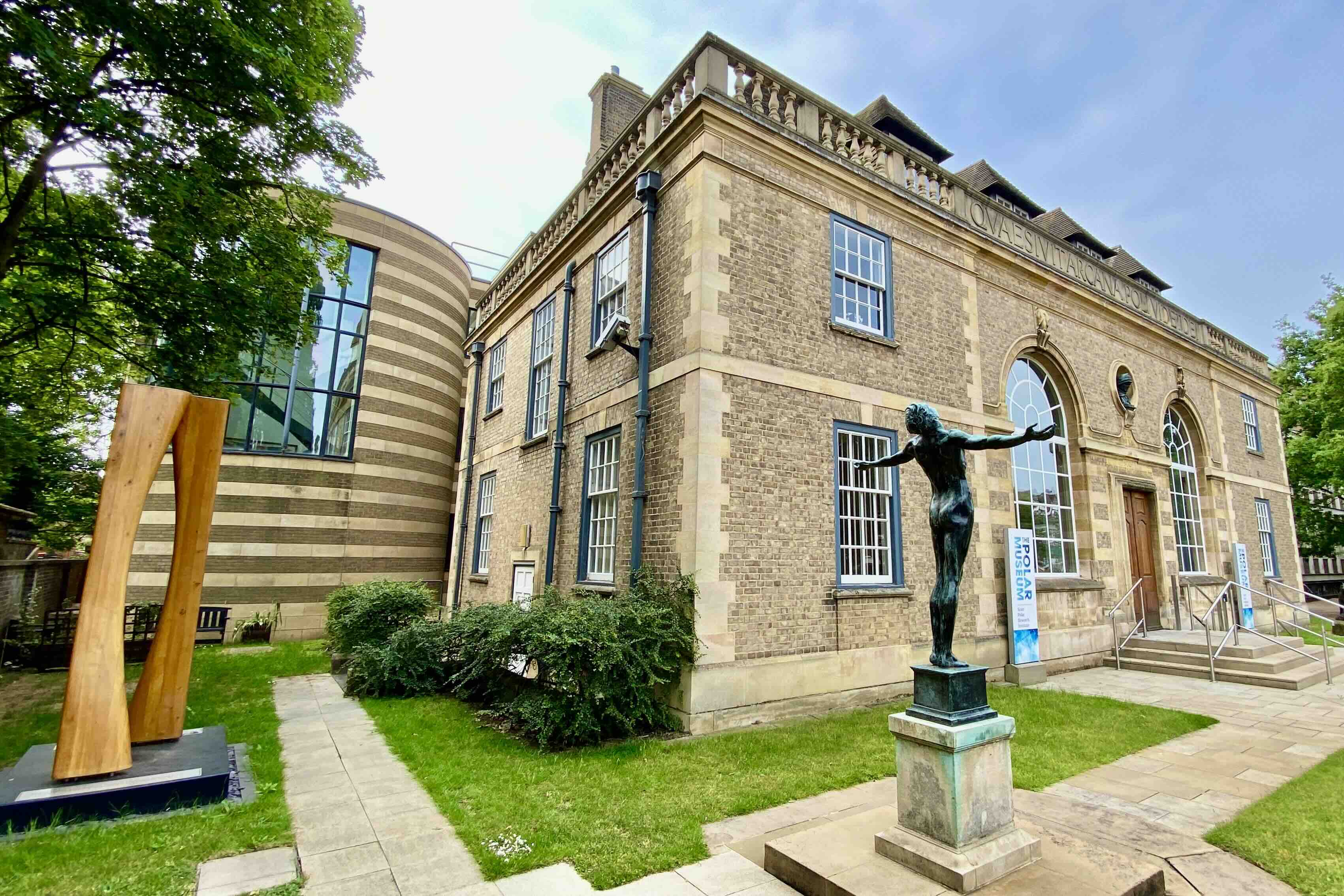
The Polar Museum is also worth a gander. Founded in 1920 as a memorial to the men who died returning from the South Pole in 1912, the collection includes sleds, navigation instruments, and the last letters and diary entries written by Captain Robert Falcon Scott in his tent, along with the reindeer-skin sleeping bag belonging to Captain Oates. Admission is free.
After that, pick by interest. The Sedgwick Museum of Earth Sciences holds the university geology collection, including two million rocks, minerals, and fossils, as well as the material gathered by Charles Darwin between 1831 and 1836. The Museum of Archaeology and Anthropology, founded in 1884, is strongest in its Pacific collection, much of it from Captain Cook‘s voyages.
The Whipple Museum of the History of Science covers instruments and prints back to the 17th century, and the University Museum of Zoology reopened after a full refurbishment. For everyday social history, the Museum of Cambridge occupies the old White Horse Inn and covers local life from the 18th to the 20th centuries. Kettle’s Yard, a house and gallery hung as a private collection, is the pick for modern art.
Where To Stay in Cambridge
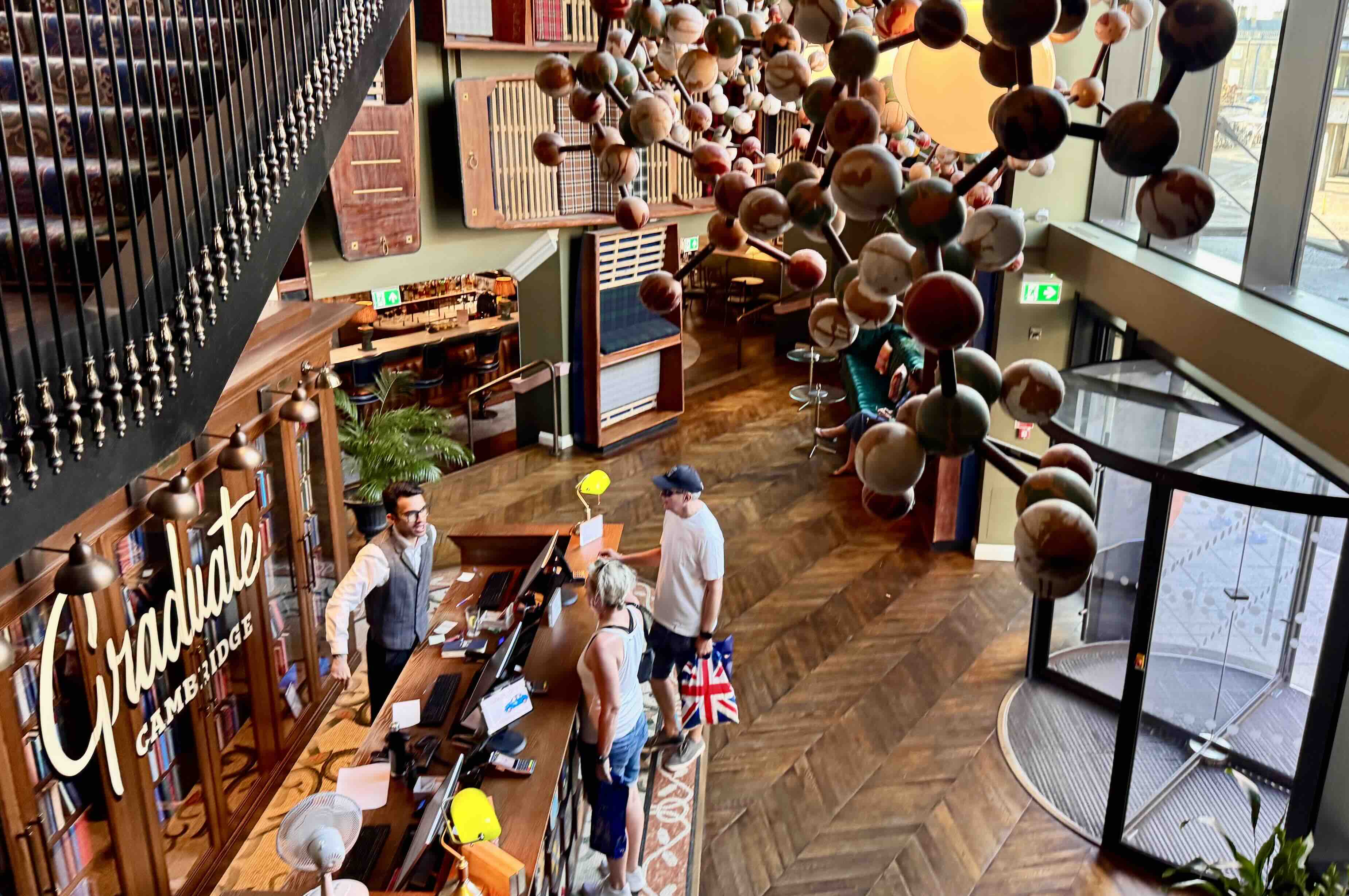
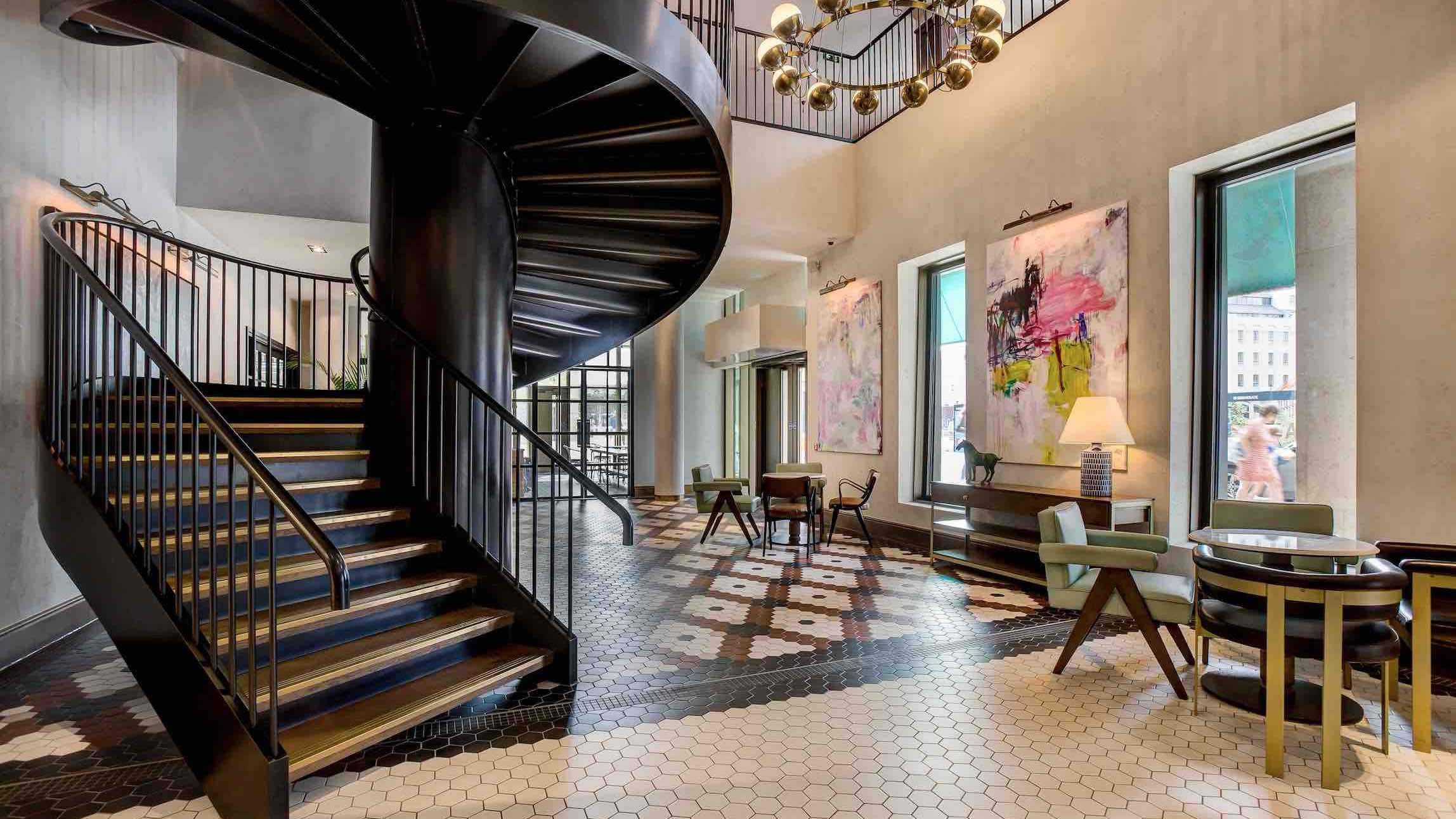
With 31 colleges filling the city, Cambridge has never had much room for hotels, so most of the city’s luxury hotels are either tucked into historic buildings or located just outside the ring of streets around the core. The obvious choice for a river-facing stay is Graduate by Hilton Cambridge on Granta Place. Relaunched in 2021 after a full redesign, it’s still the only hotel in the city with its own Cam frontage.
With 148 rooms, do as I did and request one with a balcony overlooking the river. The price difference is small, and the view is superb. Dogs are welcome, and the hotel packages accommodation with local activities such as punting, something worth checking before you book separately.
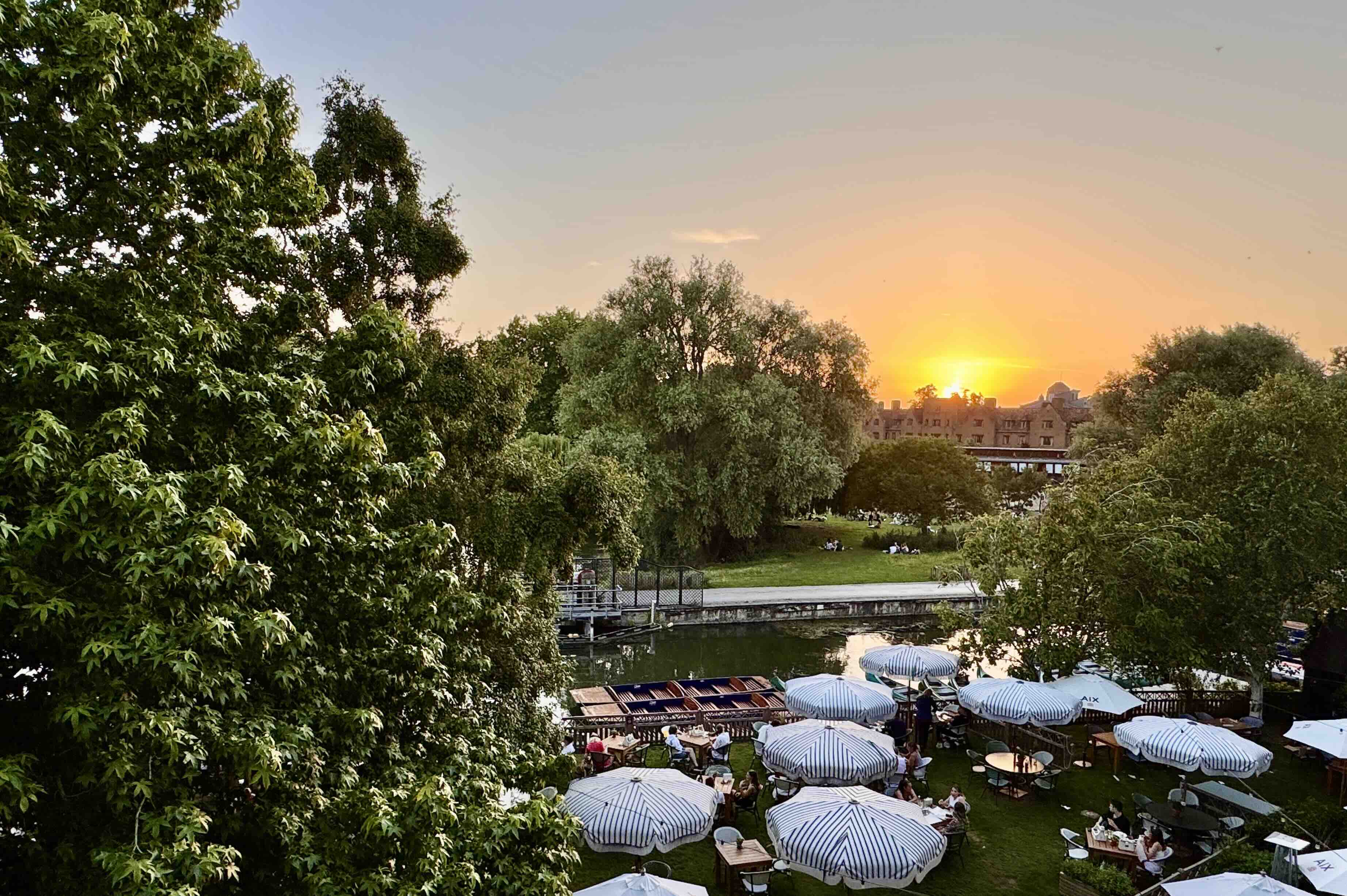
The Graduate also delivers in terms of location. Scudamore’s Granta Place punting station is immediately outside, so you can step from breakfast into a boat and be floating under the Mathematical Bridge within just a few minutes. The Fitzwilliam, Peterhouse, and Queens’ and King’s colleges are all walkable in under 15 minutes.
Garden House, the hotel restaurant, is named for the property that stood here before and cooks over an open grill, with a riverside garden and outdoor bar in summer, and afternoon tea served daily in the restaurant. The leisure club has a pool running alongside the river, plus a sauna, steam room and hot tub, and there’s plenty of parking on site with a valet option, a real treat in a city where parking is otherwise a chore.
Food & Drink in Cambridge
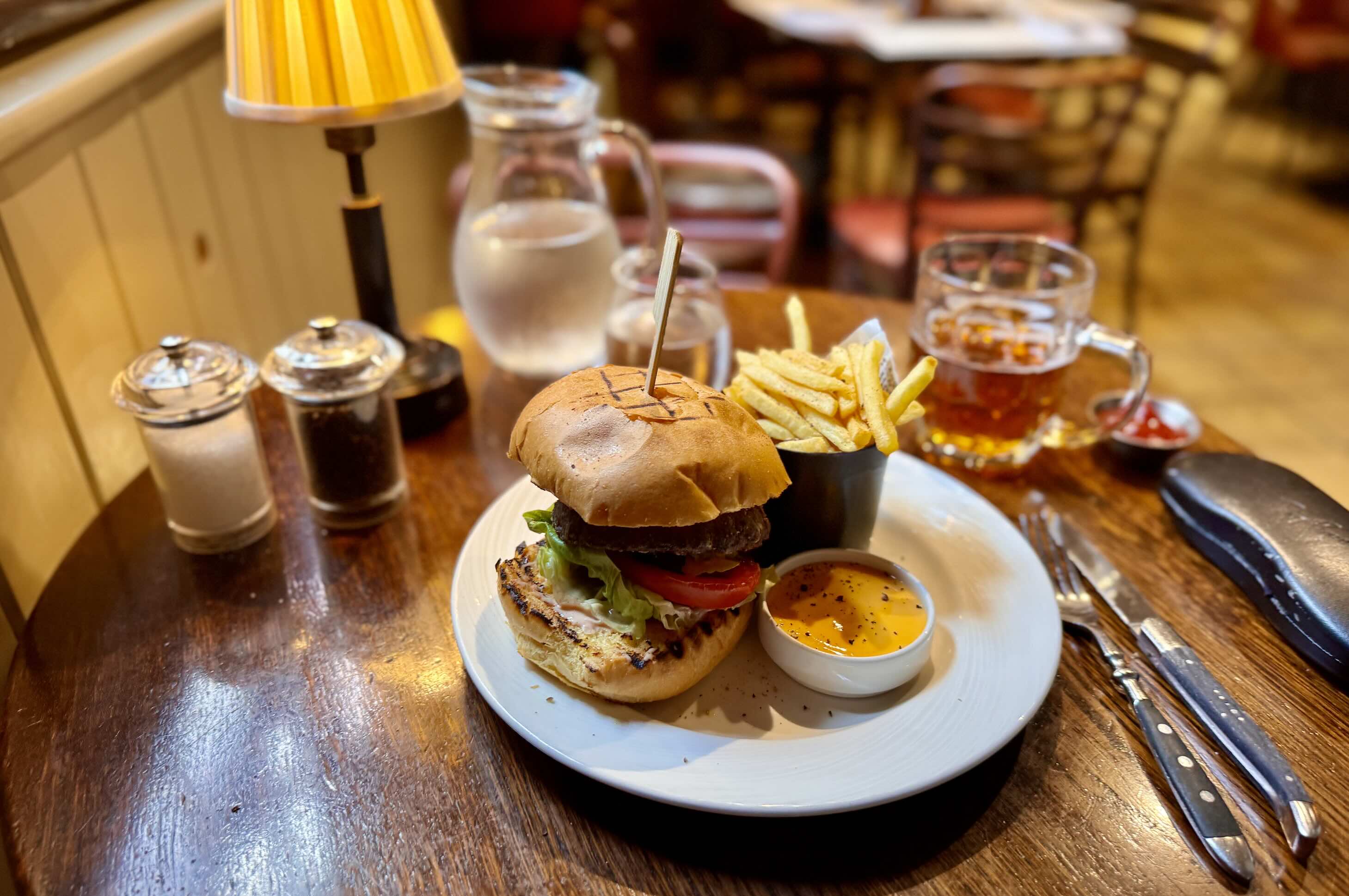
I ate at The Cambridge Chop House twice during my city visit: at lunch and again at dinner. It’s that good. Set in a glass-fronted corner at 1 King’s Parade, directly opposite King’s College Chapel, it has been serving great traditional British dishes since 2007. Menu staples include steaks aged for at least 28 days and sourced in the UK, mutton Barnsley chops, whole sea bass, and sausages made on the premises.
Two things are worth knowing before you book. The upstairs room has a view of the chapel and gets the sun, while the basement is a vaulted cellar split into four small rooms with tiled floors.
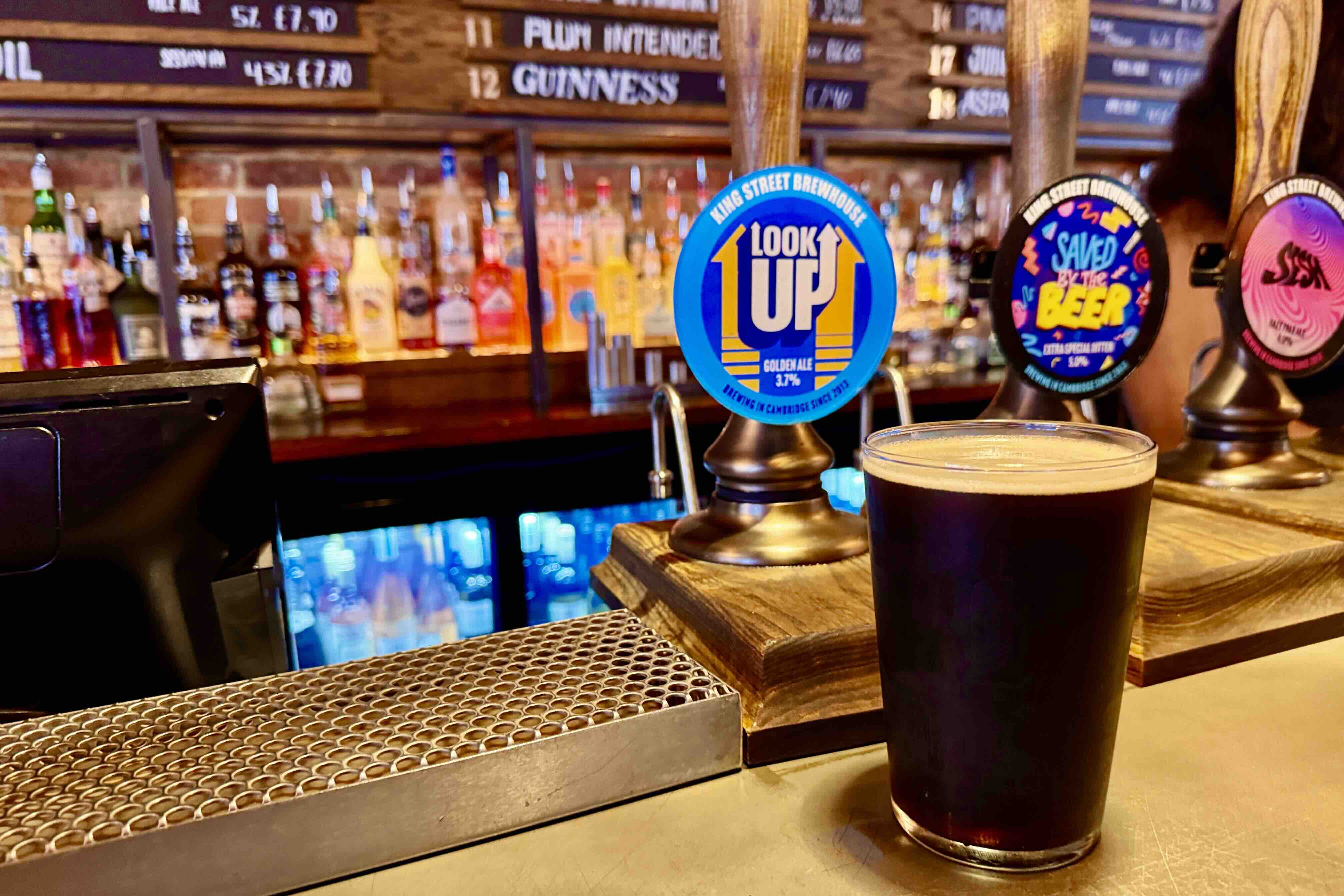
The building is air-conditioned, and the cellar is the coolest part of it, which makes it the best lunch table in central Cambridge on a hot summer afternoon.
Other options include Midsummer House, set in a Victorian villa on Midsummer Common and the city’s top fine-dining destination (it needs booking weeks in advance). Parker’s Tavern at the University Arms on Parker’s Piece serves British brasserie cooking in a room designed to feel like a college dining hall. For something cheaper and more Cambridge, the market on Market Hill runs daily with hot food stalls that suit a picnic.
Tips & Tactics
To make the most of the many fun things to do in Cambridge during your luxury getaway, check out our list of useful, practical, meaningful tips and tactics:
- Book the David Parr House, a private guide, and your punt adventure before you travel. All three sell out, and David Parr House can’t be visited without a booked tour.
- Avoid the last two weeks of May and the first week of June if you want college access. Examinations and May Balls close courts to visitors.
- Buy King’s College Chapel entry as a timed slot and build the guided tour around it, not the other way round.
- Only use licensed punt operators, which trade from the punting stations rather than from King’s Parade.
- Great St Mary’s Tower is the best first stop of any trip for getting your bearings, and the ticket includes a café discount.
- The Fitzwilliam, the Polar Museum, the Sedgwick, and the Whipple are all free and need no advance booking, though check opening days before you set out. They’re perfect places to stop if it’s rainy… or hot.
How To Get There
- By Train: Fast services from London King’s Cross reach Cambridge in under 50 minutes, with slower Thameslink trains from St Pancras International. The station is a 20-minute walk or a short taxi ride from the city core.
- By Air: London Stansted is the closest airport at 30 miles, with a direct rail link to Cambridge in 35 minutes. Heathrow and Luton are both served by coach.
- By Car: Leave the M11 at junction 11 or 12. Central parking is limited and expensive, so use one of the five Park and Ride sites on the city fringe.
- Getting Around: Historic Cambridge is walkable end to end in 20 minutes, and much of it is closed to cars during the day. Cycling is the local default, and bike hire is widely available.
__________________
Travel and lifestyles writer Bryan Dearsley is Editor of LuxuryUK, a leading source of news and reviews relating to luxury lifestyles and travel in the United Kingdom, as well as RileyMag.com.